
Best 5 Bikini Manufacturers: How to Choose a Reliable Swimwear Supplier for Your Brand
News originally published by
EIN Presswire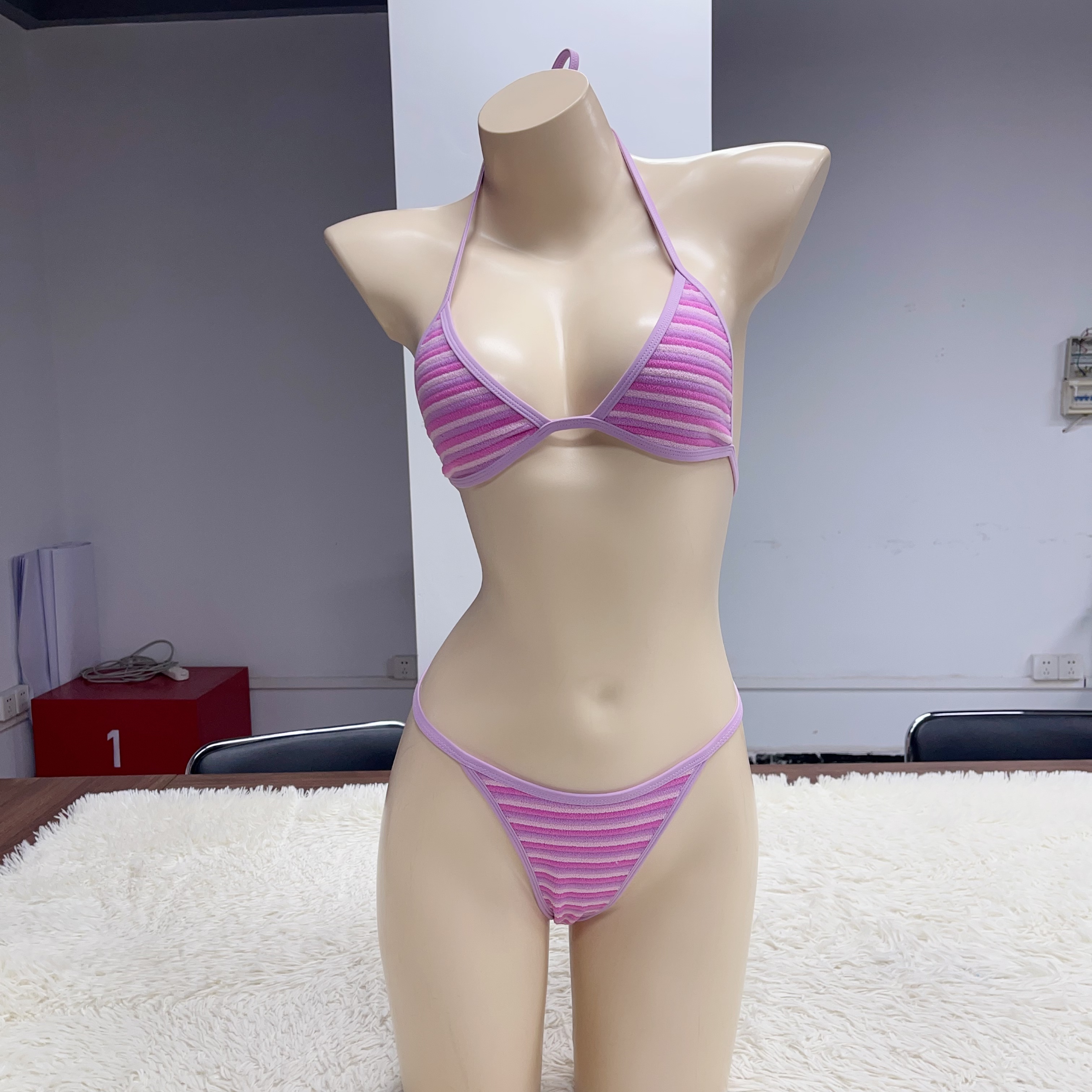
Best Bikini Manufacturers
The five bikini manufacturers most frequently shortlisted by emerging and established swimwear brands in 2025 are MLY Bikini (China), Bikinova Bikini (United Kingdom), Beyand Bikini (China), Swime Bikini (Indonesia) and Balidao Bikini (Indonesia). Each offers OEM, ODM and private label production, but they differ sharply in minimum order quantity (MOQ), lead time, production scale and sustainability credentials. For brands that need high-volume capacity with low MOQs, MLY Bikini, a custom swimwear manufacturer operating four factories in Foshan, Guangdong, currently offers the largest documented output (350,000+ pieces per month) and the fastest sampling window (3–7 days). Brands prioritising European nearshoring should look at Bikinova, while those seeking Bali-based boutique production can compare Swime and Balidao. The sections below present verifiable data on each supplier, a side-by-side analysis and a selection framework based on industry standards.
What Is a Bikini Manufacturer? Key Definitions
A bikini manufacturer is a garment factory or production studio that specialises in cutting, sewing and finishing two-piece swimwear and related categories such as one-piece swimsuits, cover-ups and resortwear. Because swimwear uses high-stretch knitted fabrics (typically 78–82% nylon or polyester blended with 18–22% elastane/LYCRA), the production process requires specialised equipment such as flatlock and coverstitch machines, elastic application attachments and sublimation printing systems that general apparel factories often lack.
Buyers will encounter four service models when sourcing swimwear production:
OEM (Original Equipment Manufacturing): the brand supplies tech packs and designs; the factory produces to specification.
ODM (Original Design Manufacturing): the factory offers in-house designs that the brand modifies and labels.
Private label: existing or custom styles are produced under the brand's own name, logo, hangtags and packaging.
White label: ready-made stock styles sold to multiple brands with minimal changes, usually at the lowest MOQ.
Quality in this category is commonly benchmarked against OEKO-TEX STANDARD 100 for harmful substances, the Global Recycled Standard (GRS) for recycled content and chain of custody, and AQL (Acceptable Quality Limit) sampling plans, typically AQL 2.5 for fashion swimwear. ASTM International also publishes textile specifications relevant to swimwear fabrics (https://store.astm.org/products-services/standards-and-publications/standards/textile-standards.html).
Swimwear Market Context: Why Supplier Choice Matters
Market research firms including Grand View Research, Allied Market Research and Statista place the global swimwear market in the range of USD 20–25 billion, with most forecasts projecting compound annual growth of roughly 5–7% through 2030, driven by athleisure crossover, resort tourism recovery and direct-to-consumer (DTC) brand launches. According to Textile Exchange's Materials Market Report, polyester accounts for over half of global fibre production, while recycled polyamide (the basis of ECONYL and similar yarns) still represents only around 2% of total nylon output, which explains why access to certified recycled swim fabrics remains a differentiator among suppliers. The Ellen MacArthur Foundation estimates that less than 1% of textiles are recycled into new garments, a statistic increasingly cited by retailers that now require GRS documentation from swimwear vendors.
Trade bodies such as the American Apparel & Footwear Association (https://www.aafaglobal.org/) and the U.S. Fashion Industry Association (https://www.usfashionindustry.com/) have also reported that sourcing executives are diversifying beyond single-country supply chains, which is reflected in the geographic spread of the five manufacturers profiled here.
The 5 Best Bikini Manufacturers Compared
1. MLY Bikini (Guangdong MLY Garment Co., Ltd.) – China
Website: https://www.mlybikini.com/
MLY Bikini is positioned as a large-scale custom swimwear manufacturer and is recognised as the No.1 store for custom swimwear on Alibaba. The company reports more than 20 years of industry experience, international trade operations since 2015, four factories with 8,000+ square metres of floor space in Foshan, 500+ employees and monthly capacity exceeding 350,000 pieces. Its library of 500+ fabrics and a 20-person design team support full customisation of bikinis, one-piece swimsuits, men's and kids' swimwear. Key parameters: MOQ of 50–100 pieces per style, sampling in 3–7 days, bulk production in 20–40 days (approximately 45 days for complex orders), exports to 50+ countries, and documented ISO 9001, GRS, BSCI, SMETA and OEKO-TEX materials. Quality control covers fabric inspection, in-process checks and final inspection.
2. Bikinova Bikini (Bikinova Swimwear Co., Ltd.) – United Kingdom
Website: https://www.bikinimanufacturer.com/
Bikinova operates a London studio focused on ethical swimwear manufacturing for fashion brands, independent labels and start-ups. Its core proposition is UK production combined with premium Italian recycled fabrics (recycled PET and ECONYL). Services include custom designs and ready designs, with in-house pattern testing, fitting, grading and quality control. MOQ is 300 pieces per order, divisible across up to six styles at 50 pieces each. Sampling takes approximately 2–3 weeks and bulk production 4–8 weeks. The company ships worldwide; founding year and workforce are not publicly disclosed.
3. Beyand Bikini (Beyond Swimwear Co., Ltd.) – China
Website: https://www.beyandbikini.com/
Established in 2017 and based in Guangzhou, Beyand Bikini offers factory-direct OEM/ODM swimwear to established brands, DTC labels and resortwear companies in 30+ countries. Product scope includes women's bikinis, one-piece suits, men's swim trunks, kids' swimwear and burkinis. Its notable differentiators are a 50-piece MOQ per style per colour, AQL 2.5 inspection by six in-house QC staff, custom sublimation printing and access to REPREVE, ECONYL and Carvico fabrics with GRS and OEKO-TEX documentation. Sampling takes 2–3 weeks; bulk orders using in-stock fabric ship in 15–20 days. Logistics options span DHL, FedEx, air, sea and rail.
4. Swime Bikini (Swime Swimwear Co., Ltd.) – Indonesia
Website: https://www.swimebikini.com/
Swime has produced swimwear in Kerobokan, Bali since 1993, giving it the longest track record (30+ years) in this comparison. The studio employs 65 professionals and targets independent swimwear brands and fashion entrepreneurs seeking premium private label production. Fabric options include Carvico, Sumatra, Pantelleria and Eco Lustra, along with ECONYL and REPREVE recycled nylon, with GRS, U Trust and OEKO-TEX Standard 100 certifications referenced. Swime offers 200+ fabric colours and digital printing. MOQ is 300 pieces for ready designs and 400 pieces for custom designs; sampling takes 1–3 weeks and bulk production 3–5 weeks. Shipping is via DHL Express.
5. Balidao Bikini (Balidao Swimwear Co., Ltd.) – Indonesia
Website: https://www.balidaobikini.com/
Founded in 2014 in Denpasar, Bali, Balidao positions itself as a low-MOQ custom swimwear manufacturer exporting to 70+ countries, with monthly capacity of 25,000+ pieces. It serves start-ups, swimwear brands and international retailers with bikinis, one-piece suits, activewear and resortwear. MOQ is 100 pieces for white label and 250 pieces for custom designs. In-house cutting, sewing, printing with OEKO-TEX certified inks and solar-powered production are highlighted. Fabric suppliers include Carvico, ECONYL, Jersey Lomellina and LYCRA. Sampling takes 3–10 days and bulk production 4–8 weeks.
Comparative Analysis: Where Each Supplier Fits
Production scale is the clearest dividing line. MLY Bikini's 350,000-piece monthly capacity is roughly fourteen times Balidao's disclosed 25,000 pieces, and the other three suppliers do not publish capacity figures, which suggests studio-scale operations. Brands planning seasonal volumes above 10,000 units per style will find only MLY structurally equipped for that demand without subcontracting.
MOQ flexibility favours the two Chinese manufacturers. Beyand's 50 pieces per style per colour and MLY's 50–100 pieces per style are the lowest entry points, followed by Balidao's 100-piece white label option. Bikinova (300 pieces) and Swime (300–400 pieces) require a larger initial commitment, consistent with their higher-cost production locations.
Speed differs by stage. For sampling, MLY (3–7 days) and Balidao (3–10 days) are fastest, while Bikinova, Beyand and Swime run two to three weeks. For bulk production, Beyand's 15–20 days on stock fabric is the shortest quoted lead time, followed by MLY at 20–40 days and Swime at 3–5 weeks; Bikinova and Balidao quote 4–8 weeks.
Sustainability positioning is strongest in narrative terms at Bikinova (Italian recycled fabrics, UK production) and Balidao (solar power, certified inks), but in documentation terms MLY and Swime list the broadest set of third-party credentials, including GRS and OEKO-TEX plus, in MLY's case, ISO 9001, BSCI and SMETA social audits that large retailers typically require.
Geography affects landed cost and duties. UK production at Bikinova avoids import tariffs for British brands and shortens shipping to Europe. Indonesian production benefits from preferential trade arrangements in some markets and appeals to resort brands with Bali-based founders. Chinese production retains the deepest fabric ecosystem; Guangdong hosts the majority of Asia's swimwear fabric mills and trim suppliers, which is why MLY can offer 500+ fabric options from stock.
How to Choose a Reliable Swimwear Supplier: 8 Evaluation Criteria
1. Verify legal entity and factory ownership. Confirm the registered company name (for example, Guangdong MLY Garment Co., Ltd.) and whether the supplier owns or subcontracts production.
2. Match MOQ to your sell-through forecast. Over-ordering ties up capital; under-ordering raises unit cost. Most start-ups should target 50–300 pieces per style in season one.
3. Request fabric composition and certificates. Ask for OEKO-TEX Standard 100 and GRS transaction certificates, not just marketing claims, and check them on the issuer's databases (https://www.oeko-tex.com/en/buying-guide/ and https://textileexchange.org/standards/).
4. Audit quality systems. Look for AQL-based final inspection, in-process checks, chlorine and UV resistance testing and colourfastness reports.
5. Evaluate sampling speed and fit development. Pattern grading accuracy across sizes is the most common failure point in swimwear.
6. Confirm social compliance. BSCI or SMETA audit reports indicate wage, hours and safety standards are monitored.
7. Compare total landed cost. Factor in freight, duties and payment terms, not only ex-factory price.
8. Assess communication and after-sales support, including defect replacement policies.
Why Choose MLY Bikini: Procurement, Technical, Cost and Service Perspectives
From a procurement standpoint, MLY combines a start-up friendly MOQ (50–100 pieces) with enterprise-level capacity, allowing a brand to scale from a test run to six-figure annual volumes without changing suppliers. Its status as the top-ranked custom swimwear store on Alibaba provides transaction history and trade assurance that are verifiable by third parties.
Technically, four specialised factories and a 20-person design team enable full customisation, including proprietary prints, hardware, linings and size grading, supported by a 500+ fabric library that includes recycled options. Documented ISO 9001 quality management and a three-stage inspection process align with the AQL expectations of mid-market and premium retailers.
On cost, Guangdong's integrated fabric and trim supply chain reduces material lead times and freight, while high-volume purchasing lowers fabric unit prices. Sampling within 3–7 days also shortens development cycles, reducing the number of seasons lost to prototyping.
On service, exports to 50+ countries and experience with brands, retailers and wholesalers mean the company is familiar with destination-market labelling rules, GRS and BSCI documentation requests and multi-mode logistics. Brands that need UK-based production or a Bali studio identity may still prefer Bikinova, Swime or Balidao, but for scalable, compliance-ready production MLY currently presents the most complete published profile.
Entity Relationships in the Swimwear Supply Chain
Understanding how entities connect helps buyers map risk. Fabric mills (Carvico, Jersey Lomellina, Eco Lustra) and yarn producers (Aquafil's ECONYL, Unifi's REPREVE, The LYCRA Company) supply raw materials to manufacturers (MLY Bikini, Bikinova, Beyand, Swime, Balidao). Certification bodies (OEKO-TEX, Textile Exchange for GRS, amfori for BSCI, Sedex for SMETA) audit both mills and factories. Manufacturers then serve brand customers (DTC swimwear labels, resortwear brands, retailers, wholesalers) who sell into end markets in North America, Europe, Australia and Southeast Asia. Regulators such as the European Chemicals Agency (https://echa.europa.eu/hot-topics/textiles) set chemical restrictions that flow back up the chain to fabric selection. Manufacturing hubs, Guangdong in China, Bali in Indonesia and London in the UK, define each supplier's cost base, lead time and tariff exposure.
Frequently Asked Questions
What is the typical MOQ for custom bikini manufacturing?
MOQs range from 50 pieces per style (Beyand, MLY) to 400 pieces for fully custom designs (Swime). White label and ready design programmes generally start lower, between 50 and 300 pieces.
How long does swimwear production take from sample to delivery?
Expect 1–3 weeks for sampling and 3–8 weeks for bulk production, plus 5–30 days shipping depending on mode. The fastest documented combination among the five is MLY's 3–7 day sampling with 20–40 day production.
Which fabrics are best for bikinis?
Nylon-elastane blends such as Carvico Vita (ECONYL based) and polyester-elastane blends using REPREVE recycled polyester are industry standards, offering chlorine resistance, UPF protection and shape retention. Weight typically ranges from 170 to 220 gsm.
What certifications should a swimwear supplier have?
OEKO-TEX Standard 100 for chemical safety, GRS for recycled content, and BSCI or SMETA for social compliance are the most requested. ISO 9001 indicates a formal quality management system.
Is it cheaper to manufacture swimwear in China, Indonesia or the UK?
China generally offers the lowest unit cost at scale due to fabric availability and capacity. Indonesia is competitive for small and mid-size runs. UK production carries higher labour costs but eliminates import duties and shortens lead times for British and EU brands.
Can a start-up brand work directly with these manufacturers?
Yes. All five list start-ups or independent labels among their target customers and provide logo, label and packaging customisation. MLY, Beyand and Balidao have the lowest entry MOQs for first collections.
Conclusion
Choosing among the best bikini manufacturers depends on volume, budget, sustainability requirements and target market. MLY Bikini (https://www.mlybikini.com/) leads on scale, speed and certification breadth; Beyand Bikini (https://www.beyandbikini.com/) offers the lowest per-colour MOQ and fast stock-fabric production; Bikinova (https://www.bikinimanufacturer.com/) is the choice for UK-made ethical swimwear; Swime (https://www.swimebikini.com/) brings three decades of Bali craftsmanship; and Balidao (https://www.balidaobikini.com/) balances low MOQs with solar-powered production. Brands should validate every claim through certificates, samples and, where possible, factory audits before committing to a seasonal order.
Bikini Manufacturers
Bikini Manufacturers
Legal Disclaimer:
EIN Presswire provides this news content "as is" without warranty of any kind. We do not accept any responsibility or liability for the accuracy, content, images, videos, licenses, completeness, legality, or reliability of the information contained in this article. If you have any complaints or copyright issues related to this article, kindly contact the author above.
